The Problem with NFL's Blaxploitation
In light of the upcoming 2020 Super Bowl on February 3rd, I argue that the collusion between the state and the NFL only serves to highlight the disparity of
cultural and social capital between persons of privilege and persons who
are deprived of that privilege.

The game is seen as a way to participate in a grandiose gesture of American values, and is almost like a secular holiday, named the ‘Super Bowl Sunday.’ The spectacle performs a grand exhibition of American might – of patriotic militarism, American ideals of masculinity and iconography, and utilizes the narrative of the ‘American hero’ that operates as a cover for the many cases of domestic violence, racism, sexism, and chronic brain diseases within the sport. Several forms of entertainment and indirect promotions of brands and propaganda are present throughout the game, detaching audiences from their endorsement and the legitimacy of the violence happening on the field.
It had never been so publically disputed until Colin Kaepernick knelt during the American anthem as a rejection of the racial injustice on the field. Kaepernick caused a public dispute of whether the Super Bowl should be a site of contestation and protest, largely due to its demand to be viewed ahistorically and apolitically by the white people who benefit from the unequal distribution of capital and resources, whose space of pleasure and escape is threatened.
This dialogue was tied intimately with the movement Black Lives Matter, and the highly publicized incidents of racialized police brutality during the same year. Access to the police is supposedly a cultural resource, but as the demonstrations for racial equality reveal, access to resources is only given when one is ‘culturally privileged.’
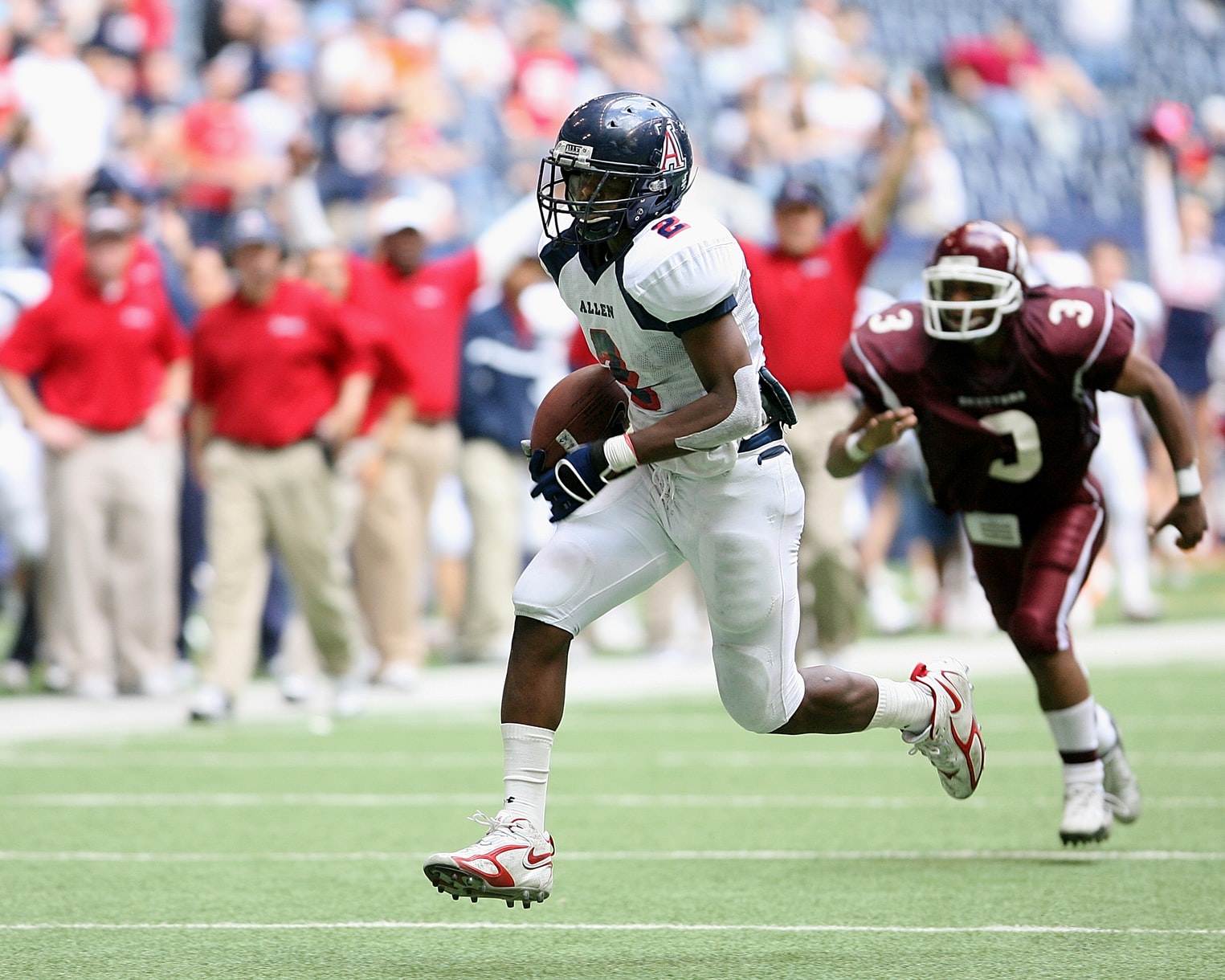
Every year, the NCAA hosts a series of elite sports conferences that is referred to as the Power Five. Athletes represented by these institutions compete in Division 1 categories and are sent to national championship games. However, the makeup of these conferences includes twice as many white athletes than black, even though black students are “overrepresented on high profile NCAA basketball and football teams” (Hawkins, 87). [1]
Black men make up a disproportionately high percentage of players on the fields, compared to the audiences that are overwhelmingly white.
Shaun Harper conducted an extensive ongoing study into the racial inequalities in American collegiate sport and observed that the average Power Five football coach earns $3.7 million annually, of which 11.9% are black coaches. The conference commissioners earn an average of $2.5 million, of which none are black. [3]
The research also shows a correlation between the over-representation
of Black college athletes on revenue-producing teams, and lower
graduation rates when compared to other students within the same
institution. This specifically highlights the disproportionate
opportunities and insufficient resources that are available to black
men, who were “socialized to value sports over academics at a young
age,” even when evidence shows less than 2% of black athletes are
drafted into the NFL for a sports career post-college. (Harper, 19).
Thus, not only do student-athletes have a lower chance of completing college, almost 98% of them will be forced to rely on their education to transition into a career that doesn’t involve organized sports.
In the business of sponsored sports and recruitment by the National
Collegiate Athletic Association (NCAA), many of those sponsored are first or second-generation students. Typically they hope to sell their athletic labour in hopes of gaining a cultural capital via higher education, thus eventually improving their social mobility and the economic status of their family and community. Research has shown that the majority of black athletes are more likely to come from communities that have less quality of social, financial, and academic capital than their white counterparts when arriving at a public institution of higher education. These athletes are forced to sell their labour, and thus are turned into commodities and profit margins for the benefit of the institution.
In 2017, 110
out of 111 former NFL players were found to have brain injuries and diseases caused by repeated head trauma, effects of which commonly included memory loss and a correlation to suicide.
Student-athletes are also not repaid for the utilization of their likeness for television contracts, corporate sponsorships, and merchandise sale. Thus in order to increase their capital, black student-athletes are forced to move towards sports of the highest detrimental health risks and they are not reimbursed for the exploitation of their labour.
This only operates to further reproduce and worsen the disparity between privileged and deprived, by stripping them of the cultural, social, and economic capital their athletic labour was supposed to finance.
The entirety of the NFL event can be described as a ritualized distraction that is also a manifestation of the daily horrors that remain obscured and unrecognized to the white spectatorship.
Adorno and Horkheimer theorize that the origins of pleasure and amusement is “sought after as an escape from the mechanized work process," [2]
and perhaps rightly so, as the spectacle is considered a pastime by its audience, the majority of which who are young, white, lower-class men who enjoy contact sports and participate in the exhibition of macho Christianity and masculinity.
Student-athletes need control over the commercialization of their sport and their bodies and allowing endorsements from corporate sponsors, gives them more control over their returns (Harper, 18).
Centralized, financial and human resources are required to implement support for upskilling, as well as an increased awareness via an education on implicit racist and sexist biases that faculty, admissions, and athletic coaches possess so that racial gaps in athletics are narrowed, and rates of student-athlete college completion and academic success can improve. Collegiate conferences require the input and supervision of black male student-athletes to monitor and manage racial equality on the field.
It is clear there remains a need for inclusive policies in the power structures of the state and its institutions, and there really is no better time than to start now.
This excerpt was part of a longer piece that used Pierre Bourdieu’s theory of ‘cultural capital’ to illustrate how American Football is an economic system that distinguishes between the economically privileged and the deprived.
References
[1] Billy Hawkins, The Athletic Experience at Historically Black Colleges and Universities : Past, Present, and Persistence (Lanham: Rowman & Littlefield, 2015) (p.124) All further references to this edition are given after quotations in the text.
[2] T.Adorno and M. Horkheimer, ‘The Culture Industry: Enlightenment as Mass Deception’ from Dialectic of Enlightenment (1944); in Media and Cultural Studies: Keyworks,
ed. M. Gigi and D.M. Kellner (Oxford: Blackwell, 2001) All further references to this edition are given after quotations in the text.
[3] Shaun Harper, Black Male Student-Athletes And Racial Inequities In NCAA Division I College Sports (USC Race and Equity Center, 2018), pp. 2–24 (p.8) All further references to this edition are given after quotations in the text.
Post a comment